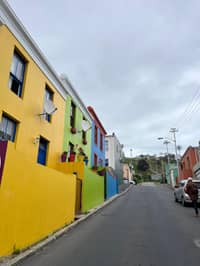
 Most reviewed
Guides
Language
EnglishCurrency
US dollar · $GetYourGuide shows prices in the currency you choose.
Guide · Cooking class
A cooking class in the Bo-Kaap: Cape Malay food at the stove
A cooking class in the Bo-Kaap puts you in a home kitchen on the hill, grinding the spices of Cape Malay cooking and eating what you make. Here is how the classes differ.
Check availabilityfrom $49 · free to cancel
Editorial team, foodtourcapetown.comUpdated October 26, 2026Reading time about 6 minutes19 sources
Quick answer, by class
- 01Most reviewed
- A 2.5-hour Malay cooking class with lunch from 109 Wale Street, 626 reviews.
- 02Shortest
- A 2-hour Cape Malay class in the Bo-Kaap, host in English or Afrikaans.
- 03With a walk
- A 4-hour Bo-Kaap walk followed by a Malay cooking class.
- 04Just your party
- A private 3-hour class in a home in Grassy Park, with local wine.
- 05Rule of thumb
- Pick the class with lunch if you want a meal; pick the walk if you want the neighborhood too.
Why learn Cape Malay cooking on the hill
Cape Malay cooking is the food of the Muslim community whose ancestors were brought to the Cape from South East Asia, India and East Africa, and South African Tourism says its cuisine keeps deep roots in the Islamic tradition of cooking.12 The Bo-Kaap is its home ground, which South African Tourism calls the heart of traditional Cape Malay cuisine.3
Eating it is one thing. Cooking it, in a house a few streets from the museum, is another. A class shows you how much happens before a pot reaches the table: spices toasted and ground, onions cooked down slowly, a sauce balanced between sweet, sour and warm. You leave with a recipe, and with a better idea of why the dishes taste the way they do. Back home, that is what lets you cook the dish again without a teacher: the order in which things go into the pot, and how long to wait before the next step.
A cooking class in the Bo-Kaap also fills a gap on a short trip. It is a lunch, a lesson and a visit to the neighborhood in one booking, and it works in any weather, which matters in a city where the wettest month, June, brings 88 mm of rain at the airport station.4
How a Cape Malay curry comes together
From the spice tin to the plate
-
First
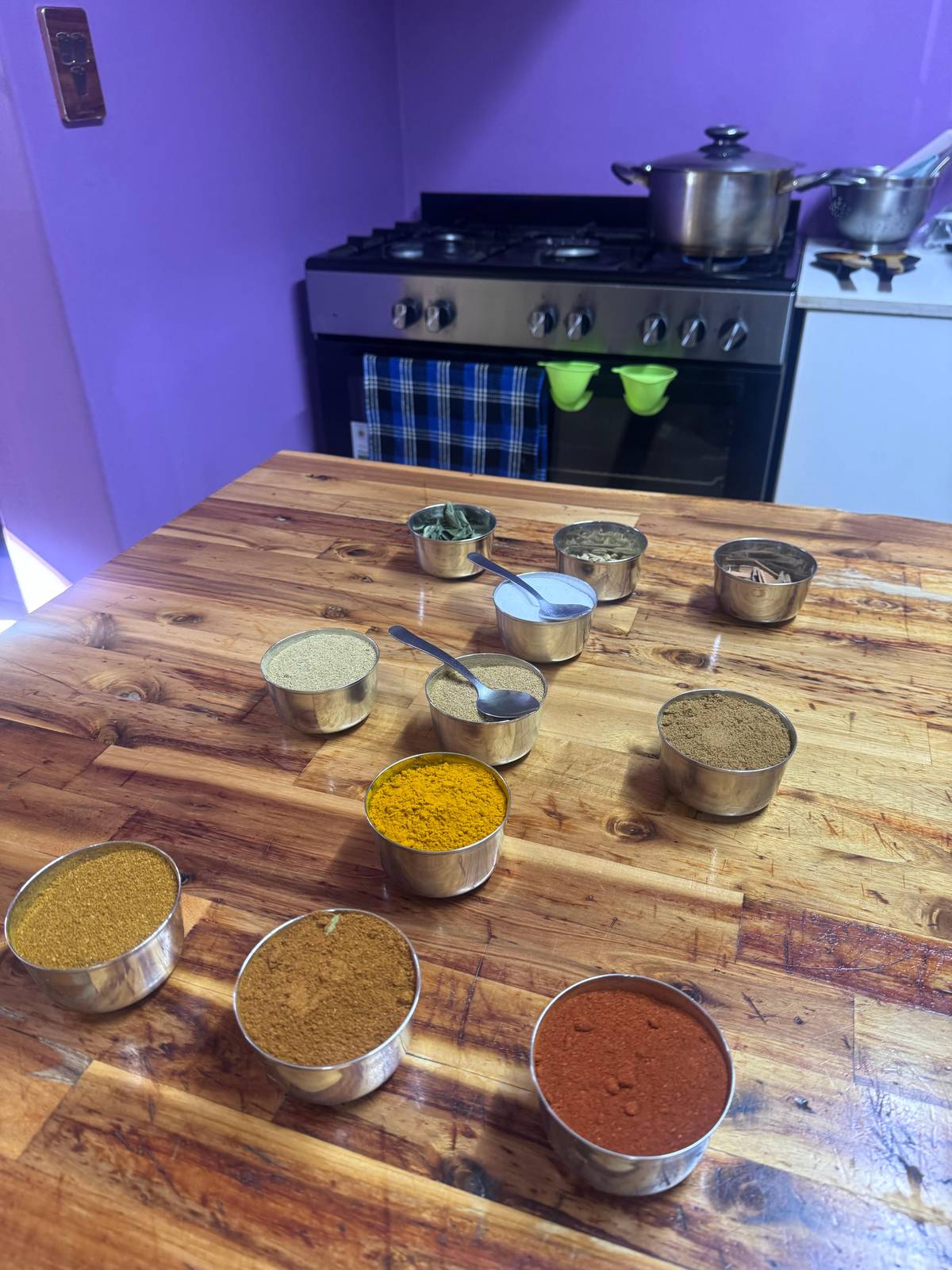
Open the spice tin
Cardamom, coriander, cumin, cinnamon, turmeric, ginger, garlic and chillies.5
-
Then
Blend a masala
The base of a Malay curry, mixed by hand.6
-
Color, not fire
Paprika for chilli
How Cape Malay cooks kept the color but tamed the heat.7
-
Slowly
Let it stew
A bredie of meat and vegetables cooks for a long time.8
-
To finish
Fold and fry
Samosas folded into triangles, perhaps a fresh roti.6
The flavors a class teaches
Start with the spice tin. South African Tourism lists cardamom, coriander, cumin, cinnamon, turmeric, ginger, garlic and chillies as the smells of a walk through the Bo-Kaap.5 It names masala, bobotie, Malay curry and roti as the flavors South Africans mean when they talk about traditional Cape Malay food.9
Heat is handled gently. South African Tourism tells how cooks in Dutch households, cooking for tamer palates, kept the color of a dish but swapped chilli powder for paprika.7 Sweet and sour sit side by side too: it describes yellow rice with raisins and a fish curry soured with tamarind.10
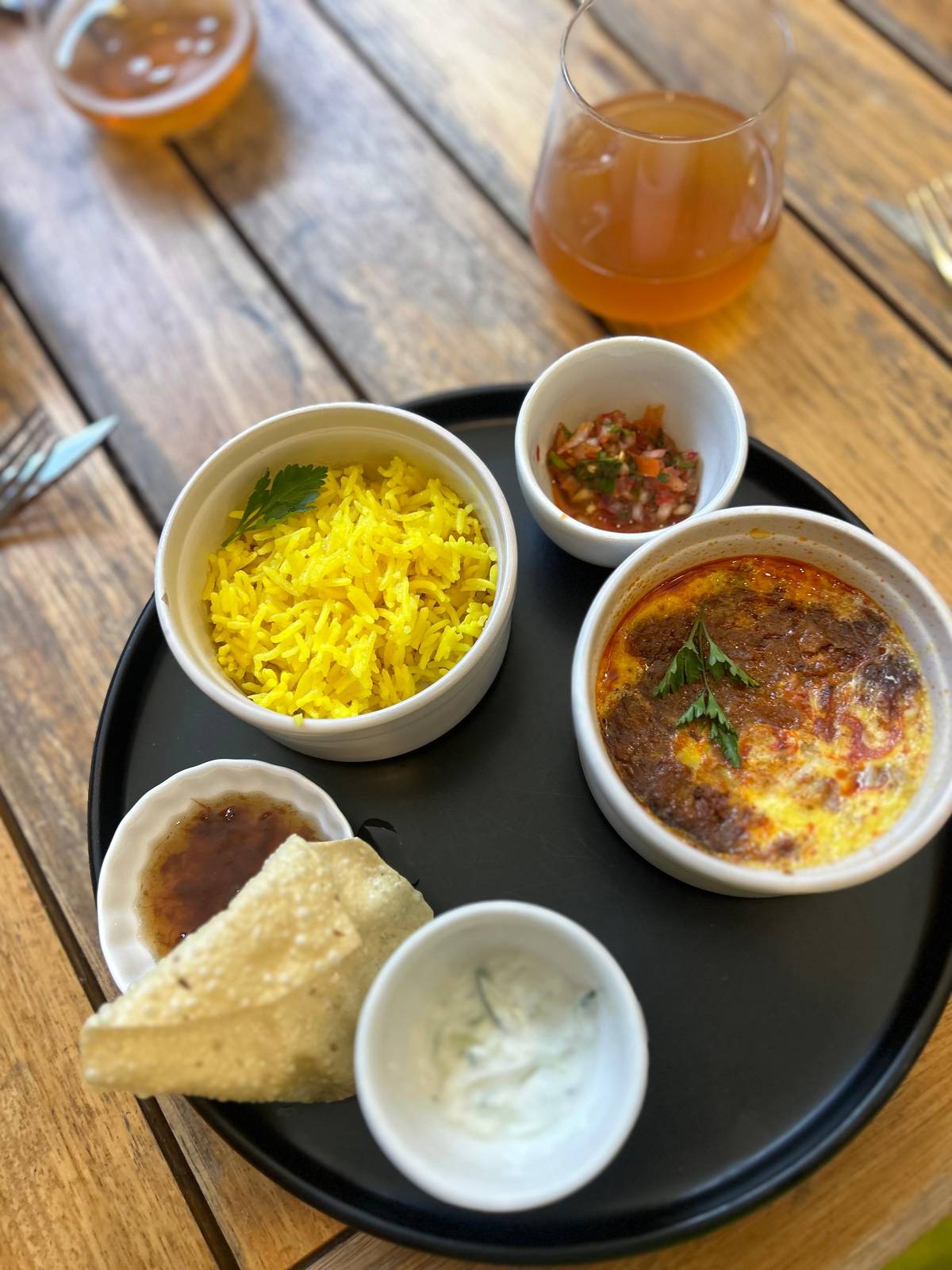
Then there are the slow dishes. A bredie, a word of Malaysian origin, is vegetables and meat, usually lamb, stewed for a long time, typically with cardamom, cloves and cinnamon around a single feature vegetable.811 Bobotie, spiced mince with raisins under a baked egg custard, is a good dish to start with if the rest of the menu is new to you.12
Reviews
Cape Malay classes by number of reviews
reviews
Side by side
Cape Malay cooking classes at a glance
| Class | Hours | Where | Extras | Price |
|---|---|---|---|---|
| Class with lunch | 2.5 | Wale Street, Bo-Kaap | Lunch you cook | from $49 |
| 2-hour class | 2 | Bo-Kaap | English or Afrikaans host | from $52 |
| Walk & class | 4 | Bo-Kaap | Neighborhood walk | from $67 |
| Private class | 3 | Grassy Park | Local wine, braai option | from $99 |
Each class as its own listing describes it; prices are per-guest starting prices and can change at checkout.
Three classes
Lunch, a walk, or a private kitchen
Most reviewed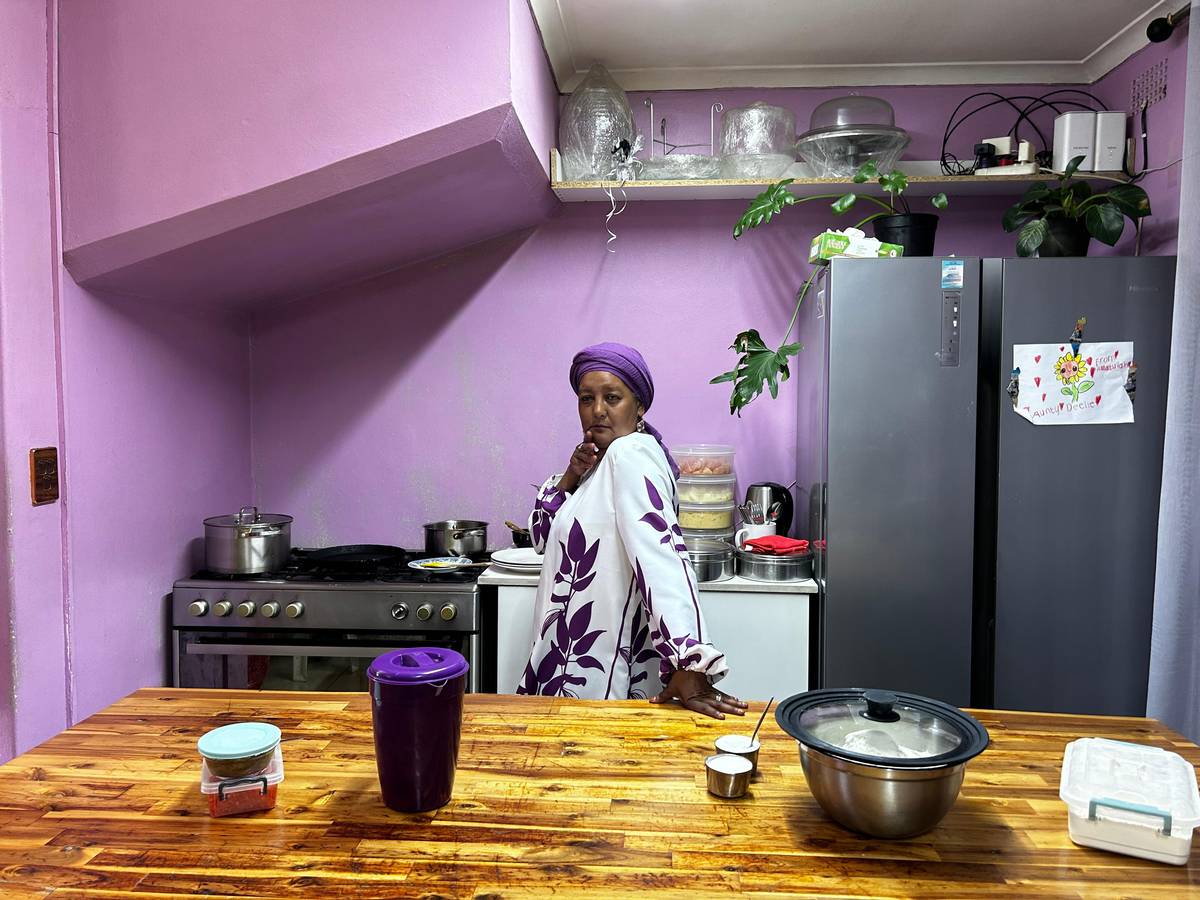 Most time
 Just your party
Decision helper
Which class suits your trip?
Read down until a line fits your trip.
The class with lunch
626 reviews, rated 4.82, 2.5 hours.
The 2-hour class
Short enough to pair with the museum.
The walk and class
4 hours of streets and stove.
The private class
A home in Grassy Park, with local wine.
A food walk
An hour of tasting in the Bo-Kaap, then three more areas.
How do you keep the colour of a meal alive without setting the mouth on fire? You substitute chilli powder for paprika.
The class with the most reviews
The class this page books is a Malay cooking class with lunch, held in the Bo-Kaap from 109 Wale Street, where it also finishes. It runs 2.5 hours with an instructor in English, and it is listed as wheelchair accessible, which is unusual on these steep streets.
With 626 reviews and a rating of 4.82, it carries more reviews than any other Cape Malay class compared here, and it costs from $49. Free cancellation up to 24 hours before makes it easy to slot into a trip whose dates may still move.
Its listing does not fix a menu in its labels, so ask what you will cook when you book, and mention any food you avoid. Its title promises lunch, so arrive hungry and leave the afternoon free for a slow walk back down the hill.
Checklist
Before you cook
01
When you book
- Tell the host what you do not eat
- Check the start time and meeting house
- Check the age rules for children
- Note the 24-hour free cancellation
02
On the day
- Closed shoes and clothes you can splash
- Modest clothes if you plan to visit a mosque
- No alcohol in most Bo-Kaap kitchens
Price check
What a class costs your group
Choose a class and the number of cooks.
People
Total from$97
from, per person $49
Check availabilityfree cancellationEvery line takes the cheapest fare per guest that Viator or GetYourGuide shows for that trip, times your number of guests, converted with the European Central Bank's reference rate. The seller's own checkout shows the exact total.
Video
Tasting traditional Cape Malay cooking in the Bo-Kaap
Until you tap play, the video stays unloaded.
Shorter, longer and private classes
If time is tight, a 2-hour Cape Malay class in the Bo-Kaap fits between a museum visit and an afternoon elsewhere, with a host in English or Afrikaans, from $52. It has 129 reviews and a rating of 4.84.
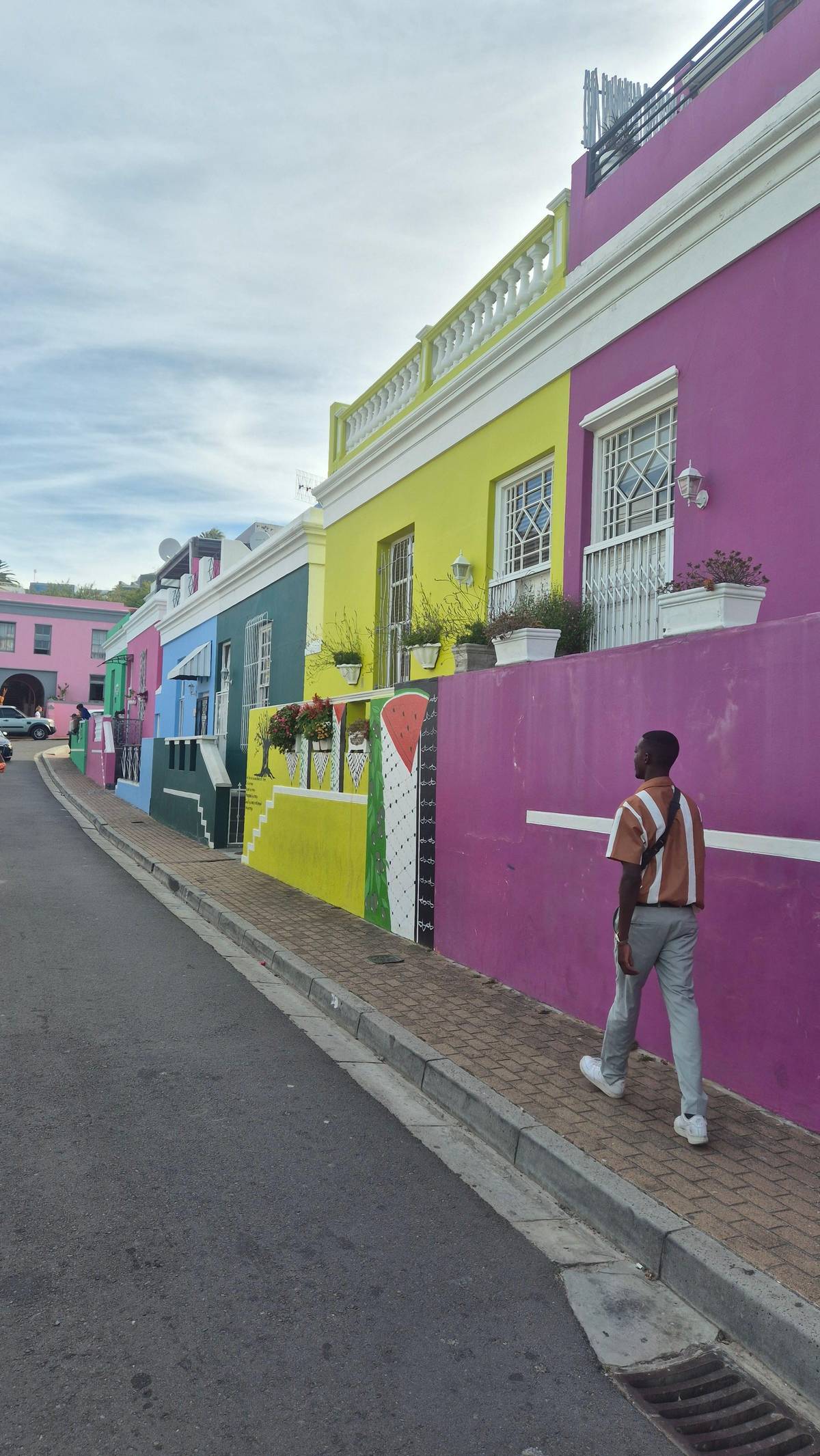
Bo-Kaap cooking tours that pair a walk with the stove give you more of the neighborhood. A 4-hour version meets at a purple house in the Bo-Kaap, walks the streets and then cooks, from $67. It suits a first visit, when the history and the food are both new, and it gives the class a context: you will have walked past the corner shops and the mosques before you pick up a knife.
For your own group, a private 3-hour class takes place in a home in Grassy Park, a residential suburb away from the Bo-Kaap, with lunch or dinner of what you cook and local wine. It offers a Cape Malay class or a South African braai class instead, from $99, and transport is not included.
Diets, alcohol and children
Cape Malay cooking is halaal by tradition, and South African Tourism says almost all Cape Malay restaurants in the city are strictly halaal, with no alcohol allowed on the premises.13 Expect soft drinks or tea in a Bo-Kaap class rather than wine; the private Grassy Park class is the one that lists local wine.
Vegetarians should ask before booking. Many classic dishes are built on lamb or mince, and a bredie is usually lamb.8 A good host will swap in a vegetable curry or extra sides, but only if you say so in advance, and the class listings here do not promise it in their labels.
Children are welcome on some classes. The private class has price bands for infants up to 4, children from 5 to 11 and adults from 12. For the others, check the age rules on the listing before you book a place for a young child, and remember that a hot kitchen is not a playground. Older children who like to cook often get the most out of it, because there is real chopping, stirring and folding to do.
From the class to the table: what to try afterwards
A class teaches you to recognize what you are eating for the rest of the trip. South African Tourism names denningvleis, braised lamb with cloves, nutmeg and vinegar, as a dish you can still find on Bo-Kaap menus.14 It suggests a bredie at Biesmiellah, and names Bo-Kaap Kombuis for platters of small savory bites.1516
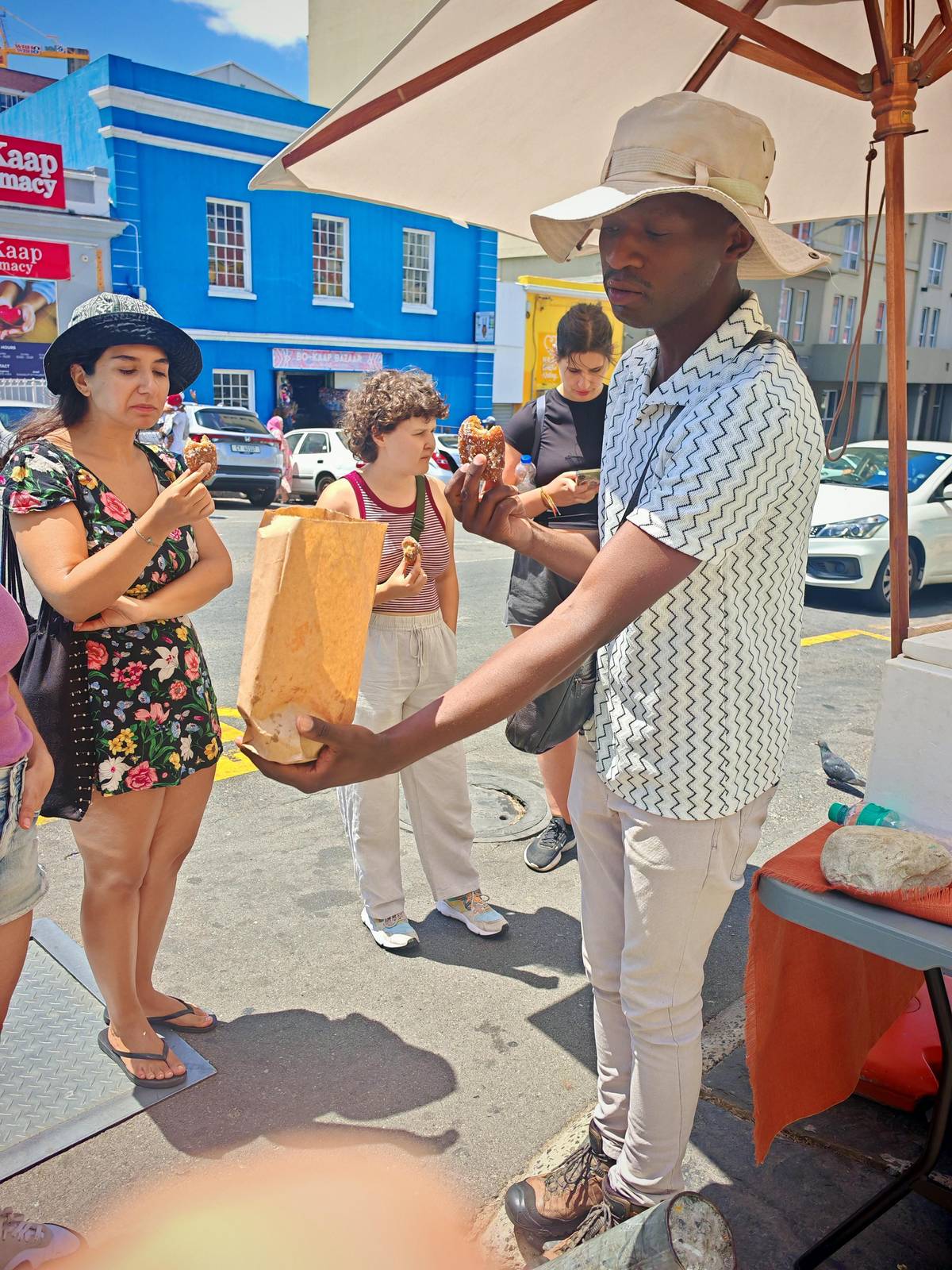
For something sweet, look for a koeksister. The Cape Malay version, South African Tourism says, has a lighter syrup and is sprinkled with coconut and spiced with cinnamon and cardamom, unlike the plaited Afrikaans twist.17 Locals sometimes sell them hot from tables on the sidewalk.18
Food also marks the big moments here. South African Tourism says the Cape Malay community serves kolwadjib, rose water rice cakes, at a baby's naming ceremony.19 You will not cook that in a tourist class, but knowing it exists tells you how much a recipe carries in this community.
Choosing your class
Think first about what else your day holds. The 2-hour class leaves room for a museum and an afternoon at the Waterfront; the 4-hour walk and class is the day's main event. The 2.5-hour class with lunch sits neatly in between.
Then think about who is coming. A couple who want the most proven class will like the one with 626 reviews; a family or a group of friends may prefer the private class, where the kitchen is yours and wine is on the table.
If you would rather taste than cook, the walking food tour this site books starts in the Bo-Kaap and spends an hour tasting there before moving on through three more parts of the city. You can also do both: a class early in the trip, and a food walk once you know what to look for.
Book your afternoon
Four neighborhoods, one long tasting lunch.
Up to 12 guests, 10+ tastings with drinks, and a full refund up to 24 hours ahead.


You ask,we answer.
How long is a Cape Malay cooking class?
Between 2 and 4 hours. The shortest Bo-Kaap class runs 2 hours, the class with lunch 2.5 hours, and the walk with a class 4 hours.
How much does a class cost?
From about $49. The class with lunch starts from $49, the 2-hour class from $52 and the private class from $99.
Where does the class with lunch meet?
At 109 Wale Street. It starts and finishes there, in the Bo-Kaap; the instructor speaks English.
Is wine served in a Bo-Kaap class?
Usually not. Almost all Cape Malay restaurants are strictly halaal with no alcohol; the private Grassy Park class lists local wine.13
Can I cancel if my plans change?
Yes, up to 24 hours before. The classes compared here offer a full refund when cancelled at least 24 hours ahead.
What spices does Cape Malay cooking use?
Warm, sweet spices more than fierce heat. South African Tourism names cardamom, coriander, cumin, cinnamon, turmeric, ginger, garlic and chillies.5
Is the class wheelchair accessible?
The class with lunch is listed as such. Its listing marks it wheelchair accessible; check the others with the host before you book.
Sources
Sources and evidence
- 1South African TourismCape Malay cuisine: food that feeds the soul↩
- 2Iziko Museums of South AfricaBo-Kaap Museum↩
- 3South African TourismThe Bo-Kaap Museum↩
- 4↩
- 5South African TourismSpice up your holiday with a Cape Malay cooking safari↩
- 6South African TourismSpice up your holiday with a Cape Malay cooking safari↩
- 7South African TourismCape Malay cuisine: food that feeds the soul↩
- 8South African TourismCape Malay cuisine: food that feeds the soul↩
- 9South African TourismSpice up your holiday with a Cape Malay cooking safari↩
- 10South African TourismCape Malay cuisine: food that feeds the soul↩
- 11South African TourismCape Malay cuisine: food that feeds the soul↩
- 12South African TourismIconic South African foods: taste all the flavours of the Rainbow Nation↩
- 13South African TourismEating out in Cape Town: fine dining and Cape cuisine↩
- 14South African TourismCape Malay cuisine: food that feeds the soul↩
- 15South African TourismCape Malay cuisine: food that feeds the soul↩
- 16South African TourismCape Malay cuisine: food that feeds the soul↩
- 17South African TourismThe best of South African food↩
- 18South African TourismCape Malay cuisine: food that feeds the soul↩
- 19South African TourismCeremonies and traditions: food of South Africa↩
Keep reading